
About 1 in 5 U.S. adults live with chronic pain. For many of them, "just exercise more" sounds impossible. When getting out of bed already hurts, a workout can feel out of reach.
You may have heard that movement helps pain. But the last time you tried, your back or knees flared for two days. That doesn't mean exercise is off the table for you.
The right exercise for chronic pain is gentle, steady, and built around what your body can do today. It's not about what you could do five years ago, or what someone else can do.
In this guide, we walk you through five low-impact options. They are walking, gentle stretching, light strength training, yoga and tai chi, and water exercise. You'll learn how to start slowly so you don't pay for it the next day. We'll also cover when exercise isn't enough and where to get help in Jerome.
What Kind of Exercise Is Good for Chronic Pain?
Low-impact exercise is usually best for chronic pain. It gets your body moving without heavy strain on sore joints or muscles. Good options include:
Walking: easy to start and easy to adjust
Gentle stretching: helps your joints move through their full range
Light strength training: builds the muscles that support your joints
Yoga or tai chi: pairs slow movement with steady breathing
Water exercise: the water supports your weight
"Low-impact" means movement that is easy on your joints, with no jumping or pounding. You can start with just 5 minutes and add a little at a time. Some soreness or stiffness is normal at first. If your pain is sharp, or worse two hours after you stop, ease back next time.
Talk to a provider before you start if your pain is new or severe. Exercise is only one piece of the puzzle.

Why Movement Helps Chronic Pain
When pain flares, resting can feel like the safe choice. But long stretches of inactivity can leave your joints stiffer and your muscles weaker. Gentle movement works the other way. Here's how it can help you:
Your joints move more easily. Movement keeps the fluid inside your joints working so they glide smoothly. We like to say "motion is lotion."
Your muscles give more support. Stronger muscles help hold your joints steady.
Your sleep and mood can improve. Federal activity guidelines link regular movement to better sleep and less anxiety and depression.
Research backs this up, especially for back pain. The American College of Physicians lists exercise as one of the first treatments to try for chronic low back pain.
We want to be honest with you, too. A large Cochrane review found that exercise may ease pain and help you do more each day, with few side effects. But the research quality was low, and results were not consistent across studies.
Walking for Chronic Pain: The Easiest Place to Start
Walking is the simplest way to get moving again. You don't need a gym, special gear, or a class. You can make each walk shorter or longer based on how you feel that day.
The CDC says you can start with just 5 minutes. Short walks of 5 or 10 minutes still count, and they add up over the week. Add time in small amounts, and let your body adjust before you add more.
These tips can help:
Pick flat, even ground for your first walks.
Wear shoes that fit well and feel comfortable.
Walk at a pace where you can still hold a conversation.
If you want more structure, the CDC points people to Walk With Ease. It's an Arthritis Foundation walking program built for people with joint pain, and it has a self-guided version.
A set place to walk makes the habit easier to keep. Here in Jerome, a park like Gayle Forsyth Memorial Park can be a good spot to build your routine.
Gentle Stretching for Back Pain and Stiff Joints
Walking gets you moving. Stretching helps you move with less stiffness.
Stretch slowly and never bounce. Ease into each stretch until you feel a slight pull, then hold it for about 30 seconds. Breathe normally, and don't hold any stretch that hurts.
Try these three beginners stretches:
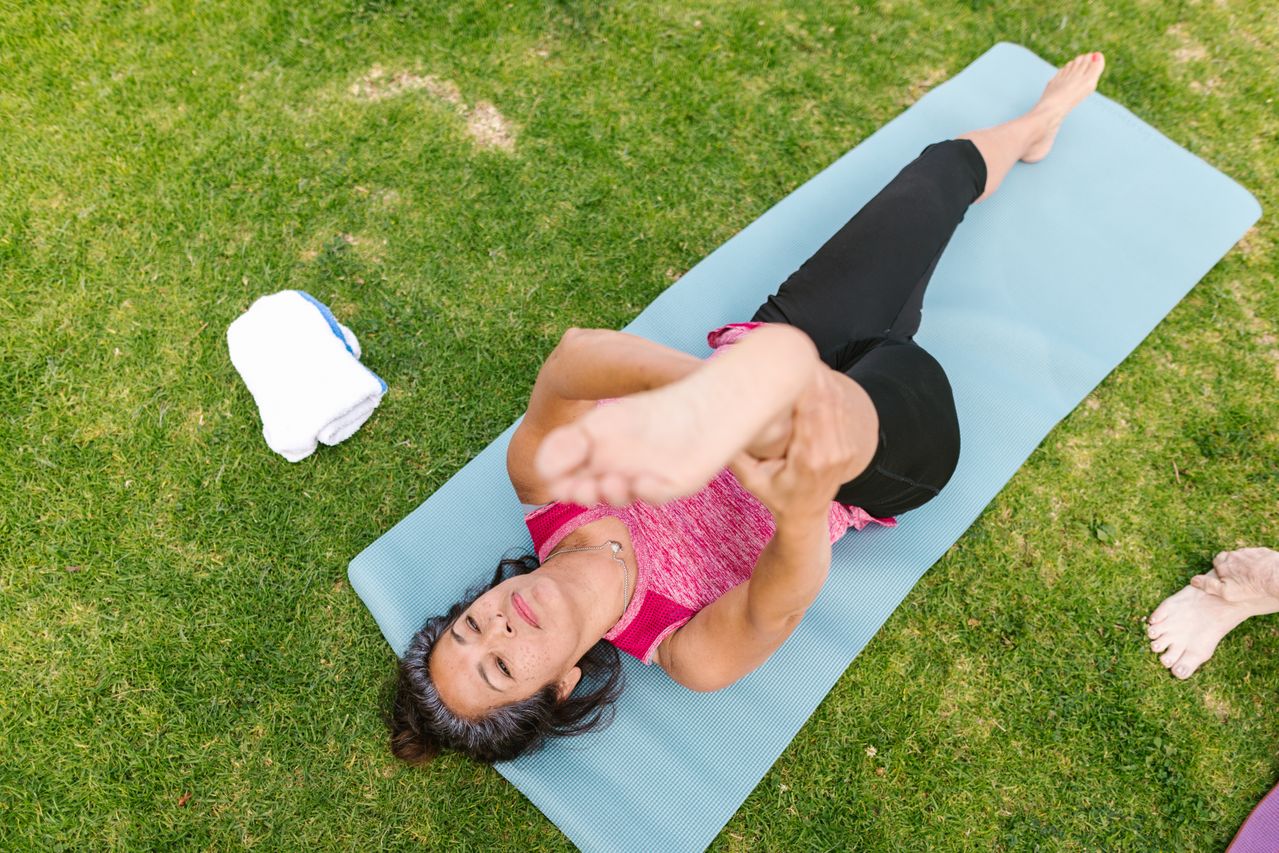
Knee-to-chest: Lie on your back and gently pull one knee toward your chest. Switch sides.
Seated hamstring: Sit on the edge of a chair with one leg straight out. Lean forward slightly from your hips.
Neck side-tilt: Sit tall and slowly tilt one ear toward your shoulder. Switch sides.
Stretching is easier when your muscles are warm. Try it after 5 to 10 minutes of light activity, like a short walk. Stop right away if pain turns sharp.
Strength Training With Chronic Pain (Light Weights or Bands)
Once stretching feels easy, it's time to build the muscles that protect your joints. Stronger muscles help support sore knees, hips, and backs. You don't need heavy weights to get there.
Start with your own body weight or a resistance band. The CDC suggests choosing weights or bands that don't cause joint pain. Try these three beginners moves:
Sit-to-stand: Stand up slowly from a sturdy chair, then sit back down with control.
Wall push-up: Place your hands on a wall at shoulder height. Bend your elbows, then push back.
Glute bridge: Lie on your back with knees bent. Lift your hips a few inches, then lower slowly.
Federal activity guidelines suggest strength work at least two days a week. If you have a chronic condition, do what your abilities allow and avoid long stretches of inactivity. Focus on good form, and make the moves harder only in small steps.
Pain stopping you from getting up? Learn aboutIovera cold therapy for nerve pain.
Yoga and Tai Chi for Chronic Pain
Yoga and tai chi combine slow, controlled movement with steady breathing. That calm pace lets you stay in charge of how far you go. The National Institutes of Health reports that yoga may offer a small benefit for low back pain. Tai chi may also ease pain and help you move better if you have low back pain.
Here's how the three most common options compare:
Yoga: Slow pace with held poses, done standing, seated, or on the floor. It's a good fit if you want to work on flexibility.
Tai chi: Slow, flowing moves done standing. It's a good fit if you like moving on your feet.
Chair yoga: Slow moves done while seated. It's a good fit if standing or floor work is hard for you.
Chair yoga is a gentle way to begin if standing is hard. When you look for a class, choose one labeled "gentle" or "restorative." Tell the instructor about your pain, since people with health conditions may need to change some poses.
Yoga may also help you manage stress and sleep better. That's a welcome bonus when pain wears on you day after day.
Water Exercise: Low-Impact Movement for Sore Joints
Some days, standing and walking may hurt too much. Water can give you another way to move. Your body floats in water, so the water supports your weight and eases stress on your joints.
You don't need to be a strong swimmer to start. Try one of these:
Water walking: Walk forward and backward in waist- or chest-deep water.
Gentle laps: Swim at an easy pace and rest at the wall as needed.
Aquatic classes: Many warm-water classes for joint pain don't require swimming skills.
Warm water can soothe sore joints and muscles. The Arthritis Foundation recommends 83 to 90 degrees for warm-water exercise. Ask about the water temperature before you sign up for a class.

How to Start Exercising When Everything Hurts
All of these work best with a plan. Here's how to start without paying for it the next day.
Follow a simple rule: start low and go slow. Do less than you think you can at first. According to the CDC, your joints may need 6 to 8 weeks to get used to a new routine.
Learn to tell normal soreness from warning pain.
Normal soreness:
Some pain, stiffness, or swelling when you start something new
Soreness that gets better with rest
Pain that eases within 2 hours
Warning signs (see your provider):
Sharp, stabbing, or constant pain
Pain that makes you limp
Pain that lasts over 2 hours or gets worse at night
Pain or swelling that doesn't get better with rest
Joints that look red or feel hot
The Arthritis Foundation uses a simple self-check. If your pain is worse two hours after exercise than before you started, you did too much. Ease up next time.
Keep a simple log. Write down what you did, for how long, and how you felt afterward. Over time, it will show you what your body can handle.
Plan for flare days, too. On a bad day, go shorter, go gentler, or switch to water exercise instead of stopping completely.
Want the bigger picture? Readwhat happens at a chronic pain clinic.
When Exercise Isn't Enough: Pain Control Options in Jerome
Exercise helps many people, but it isn't always enough on its own. The CDC says pain from activity should get better over time. If yours doesn't, or it feels severe, it's time to talk with a provider.
Atour wellness center in Jerome, our pain control options include:
- Joint injection therapy
- Nerve-block procedures
- Iovera cold therapy
- Regenerative medicine options, such as PRP
Your first visit starts with a personalized, unrushed evaluation. We take time to learn your history, symptoms, and goals. Curious how that works? Contact us today!
FAQs
What exercises are best for chronic pain?
Low-impact activities are often a good place to start when living with chronic pain. Options include walking, gentle stretching, light strength training, yoga or tai chi, and water exercise. Choose movements that fit your current abilities and increase activity gradually.
How much exercise should I do when I have chronic pain?
Start slowly and let your body adjust. Even a short walk or a few minutes of gentle movement can be a starting point. Gradually increase the duration or intensity as your body becomes more comfortable, rather than trying to do too much at once.
Should I exercise if my chronic pain gets worse?
Some soreness or stiffness can happen when beginning a new activity, but sharp, severe, or persistent pain can be a warning sign to stop and speak with a healthcare provider. If pain remains worse after exercise or interferes with normal movement, consider reducing the activity and getting professional guidance.