You've tried one antidepressant, maybe two. You've tried talk therapy too. Still, you feel stuck in the same heavy rut. Then someone mentions TMS, and you wonder if it's worth your time.
Does it actually work, or is it just one more thing to try? You deserve a straight answer before you spend time and money. This guide explains what research says about transcranial magnetic stimulation (TMS). You'll see how often it helps, how long results last, and who it helps most.
We'll keep the numbers plain and the facts honest. Some of it is good news, and some of it is a reality check. Both matter when you're deciding what comes next for your mental health.
So, Does TMS Therapy Actually Work?
Yes, TMS works for many people with depression, especially when medicine hasn't helped enough. In a large study of real clinics, about 58% of patients improved a lot. Doctors call this "response." About 37% had their symptoms mostly go away, which is called "remission."
Tightly controlled trials show lower but still clear results. In those studies, about 25% to 50% of people respond.
TMS doesn't work for everyone. The evidence is strongest for depression, the first use the FDA cleared, in 2008. Some TMS devices are also cleared for OCD, migraine, and quitting smoking. Research on PTSD and general anxiety is still growing.
For many people who improve, the benefit lasts. In one study, about 6 in 10 still met the response mark a year later.
If you're having thoughts of suicide, call or text 988 now. The 988 Suicide & Crisis Lifeline is free and open 24/7. In an emergency, call 911. TMS is not emergency care.
How TMS Works in the Brain
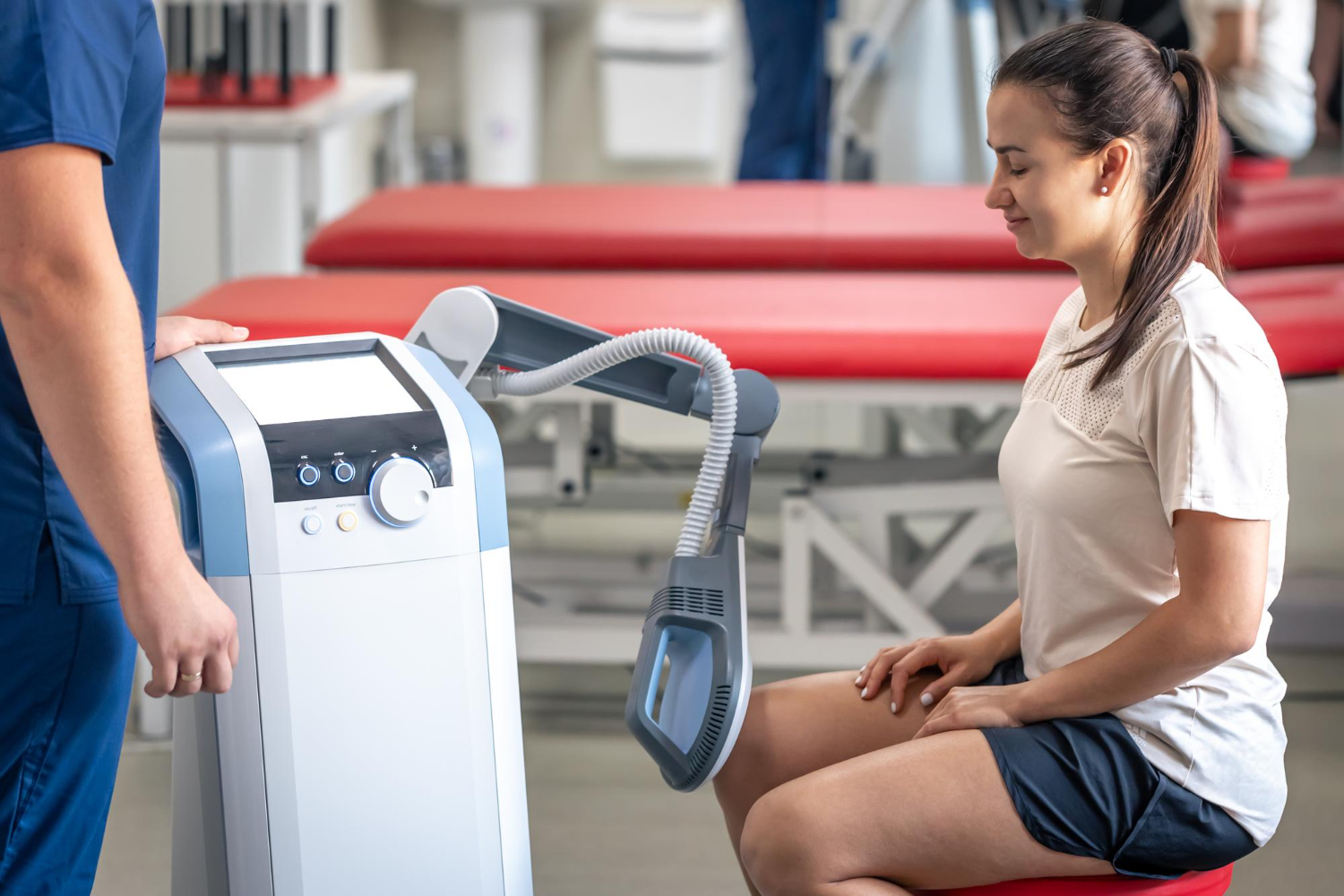
TMS uses a magnetic coil placed against your scalp near your forehead. The coil sends short magnetic pulses to mood areas at the front of your brain. Researchers think these areas are less active in depression. The pulses aim to make them more active.
Pulse: The coil sends a magnetic pulse.
Brain area: The pulse reaches the mood areas at the front of your brain.
Mood circuit: The goal is for those circuits to become more active over time.
Experts are still learning exactly how TMS eases depression. Even so, studies can measure how well it works, as you'll see below.
TMS is non-invasive. There's no surgery and no anesthesia, and you stay awake the whole time. It does not dull your thinking.
People sometimes mix up TMS with ECT, often called shock therapy. They are not the same. ECT causes a brief, controlled seizure under general anesthesia. TMS does not cause a seizure on purpose and does not need anesthesia.
Want to know what a session looks like? See our TMS therapy service page to learn more.
What Research Says about TMS Success Rates
Before the numbers, it helps to know two words researchers use. Each one sets a different bar for success.
Response: Your symptoms drop by at least half.
Remission: Your symptoms are mostly gone.
In a large study of everyday clinics, doctors rated about 58% of patients as responders. About 37% reached remission. When patients rated themselves, the numbers ran lower, with about 42% to 56% responding.
Controlled trials are stricter, so their numbers are lower. In controlled trials of TMS, about 25% to 50% of people respond, and about 12% to 35% reach remission. In these trials, real TMS clearly beats sham, a placebo version of the treatment.
Everyday clinics (doctor-rated)
Response: About 58%
Remission: About 37%
Controlled trials
Response: About 25–50%
Remission: About 12–35%
Your history matters too. In one large trial, people who had tried fewer antidepressants tended to respond better. People whose current bout of depression was shorter also did better.
You don't have to guess whether TMS is helping you. Researchers track progress with short mood questionnaires, like the PHQ-9, before and during treatment. Ask any provider how they will track yours.
Numbers are helpful, but the next question most people ask is: will it last?
How long TMS Results Last
For many people who improve, the benefit holds. One study followed 257 people for a full year after TMS. During that year, they stayed on their usual care, including antidepressant medicine. Of those who improved by the end of treatment, about 62.5% still met the response mark 12 months later.
Some people need more help along the way. In that study, about 1 in 3 had TMS restarted during the year. People who responded the first time were more likely to benefit again when TMS started back up.
End of treatment: You and your provider look at how much your symptoms have changed.
The months after: Watch for old symptoms creeping back, and tell your provider early.
12 months: In the study, about 6 in 10 people who improved were still at the response mark.
TMS often works alongside medicine and therapy, and using them together may help. Our life coaching service can be one part of that support.
Who TMS Works Best For
Knowing it works for many people is one thing. Knowing whether it fits you is another.
The strongest evidence is for adults with depression that hasn't improved enough with medicine. That's the group most TMS studies have focused on.
Across all TMS devices, the FDA has cleared TMS for:
- Depression
- Depression with anxiety symptoms
- OCD
- Migraine
- Quitting smoking
Clearance varies by device, so not every machine is cleared for every use. Ask any provider which uses their device is cleared for. For PTSD, addiction, and general anxiety, the evidence is early or limited. A good provider will be clear with you about that.
If anxiety is part of what you're facing, here'sa simple grounding trick for anxiety you can use in the moment. It won't treat an anxiety disorder, but it can help you get through a hard spell.
Likely a good fit
- You're an adult with depression.
- Medicine hasn't helped enough.
- You want an option with no surgery or anesthesia.
Talk to your provider first
- You have metal or implants in or near your head.
- You have a history of seizures.
- You take medicine for anxiety or seizures.
TMS usually isn't an option if you have metal or certain implants in or near your head. Dental fillings are generally fine.
Most psychiatric medicines can stay in place during TMS. Some, like certain anxiety or seizure drugs, may make it work less well. Talk to your prescriber first, and never stop a medicine on your own.
A TMS consult is where it gets sorted out. Expect questions about your mood history, past treatments, medicines, and any metal or implants. Some providers also do a physical exam. That way, you get an honest answer about whether TMS makes sense for you.
TMS Side Effects and Safety
Most side effects from TMS are mild to moderate and ease soon after a session. They also tend to fade as treatment goes on. The most common ones are scalp discomfort and headache.
Common: Scalp discomfort during or after a session
Common: Headache, usually short-lived
Rare: Seizure
Rare: Mood highs (mania), mostly in people with bipolar disorder
Rare: Hearing problems if the ears aren't protected during treatment
Seizure is the serious risk, but it is very rare. One large survey looked at more than 586,000 TMS sessions. It found about 0.31 seizures per 10,000 sessions. That's roughly 1 in every 32,000 sessions.
Risk is higher for people with epilepsy or brain lesions, such as damage from a stroke or head injury. Seizures were also most likely in the first few sessions. That's why careful screening before you start matters.
TMS needs no anesthesia and has no downtime. Most people drive themselves home and go on with their day. Before you start, tell your provider about:
- Any metal or implants in or near your head
- Any history of seizures or epilepsy
- Any brain injury or brain condition
- Any history of bipolar disorder
- Every medicine you take
If the research sounds promising, here's what getting started looks like close to home.
Getting TMS in Jerome and the Magic Valley
You don't have to drive to Boise for transcranial magnetic stimulation (TMS). AtCentral Idaho Wellness Center, we offer TMS therapy service at 868 E Main St, Jerome, ID 83338. That keeps care close whether you live in town or elsewhere in the Magic Valley.
Getting started begins with a conversation. Call and ask for Mental Health & Wellness, and we'll walk you through your options. Safety guidelines call for screening before anyone starts TMS, so expect questions about your health. Plans are built for each person, and we set honest expectations from the start.
Course length varies by device and protocol. Most published studies used daily sessions, five days a week, over several weeks. Ask any provider, including us, how their plan compares.
TMS is one part of our Mental Health & Wellness program. The program can also include lab work, hyperbaric oxygen therapy, and life coaching. You can use the pieces that fit your goals.
Ready to take the next step? Call us today at (208) 613-3437 or contact us through our online form to get started!