You've probably heard PEMF can help with pain, healing, even sleep. But what does it actually do once those pulses reach your body? Here's the honest version.
PEMF therapy uses gentle, pulsing magnetic fields. Plenty of websites make big promises about it. Some of those promises hold up in research, and some don't yet. We'd rather give you straight facts than a sales pitch.
This guide explains what PEMF therapy actually does inside the body. You'll see what the research supports and where the evidence is still early. Then you can decide if it fits your care plan.
What PEMF Therapy Does at a Glance
PEMF therapy sends gentle, pulsing magnetic fields into your body that create tiny electrical signals in your tissue. The pulses pass through skin and muscle without any needles. Researchers think these signals act on cell receptors linked to swelling and repair. Here is what the research shows so far:
Bone healing: The FDA approved the first PEMF bone-healing device in 1979 for broken bones that would not heal.
Knee arthritis: Some reviews found less pain and stiffness, mostly in the short term. Others found no clear pain relief.
Sleep, mood, and energy: These claims are common online but less proven.
PEMF does not work the same way for everyone. It fits best as one part of a full care plan.
What Happens in Your Body During PEMF Therapy
Your body already runs on tiny electrical charges. Your cells use them to send signals to each other. Your nerves and muscles depend on these signals to work.
PEMF adds a gentle push to that system. Think of each pulse as a soft tap on a cell's door. The tap doesn't force anything open. It gives the cell a small signal to respond.
Here's how it works, step by step:
Pulse: The device sends a pulsing magnetic field through your skin and muscle.
Signal: The field creates tiny electrical currents in the tissue below.
Cell response: Lab studies show PEMF can act on receptors on bone and joint cells. Those receptors are linked to swelling and repair.
What happens after that is still being studied. Researchers are looking at how this response may calm swelling and help rebuild tissue, such as bone.
Now that you know what happens in your cells, let's look at where the research is strongest.
Where PEMF Research Is Strongest
Bone healing has a long track record. PEMF has been used tohelp bones heal for more than 40 years. The FDA approved the first PEMF bone-healing device in 1979. It was meant for broken bones that would not heal on their own, called nonunion fractures.
Arthritis has also been studied a lot, mostly in the knee. A 2020 review of placebo-controlled trials found PEMF eased arthritis pain and stiffness. People in those studies also scored better on physical function. A 2018 review found similar pain and function gains for knee arthritis.
Bone healing (nonunion fractures)
Evidence strength: Long track record
What studies found: FDA-approved device since 1979 for bones that won't heal.
Knee arthritis
Evidence strength: Many studies, mixed results
What studies found: Some reviews found less pain and stiffness; others found better function only.
Hand arthritis
Evidence strength: Very limited
What studies found: Only one trial, which found less pain and better function.
Neck arthritis
Evidence strength: Not shown
What studies found: Two trials found no clear benefit
Keep two limits in mind. First, most results were short term. Researchers still don't know how long the benefits last.
Second, studies used different devices, pulse strengths, and session lengths. That makes results hard to compare. No one has settled on the best settings yet.
At our Jerome clinic, PEMF is one part of a care plan for joint and recovery concerns. Our team sets each session for your needs instead of using one setting for everyone.
Not every claim about PEMF holds up the same way. Here's where the evidence is still catching up.
Where the PEMF Evidence Is Still Early
Not every study gives PEMF a clear thumbs-up. A 2013 review of knee arthritis studies found no clear pain relief. It rated the evidence low quality for function and very low for pain.
A 2019 knee review found better function, but no clear change in pain or stiffness. A 2026 knee review found no clear pain relief after one month. It said the best device settings still aren't known.
Cleveland Clinic notes there isn't definite proof that PEMF works. Some of the benefit people feel may be a placebo effect. Results also vary from person to person.
Here's how common online claims compare with the research:
"PEMF heals broken bones." FDA-approved devices help bones that won't heal on their own. For fresh breaks, the research is mixed.
"PEMF stops joint pain." Some reviews show short-term relief for knee arthritis. Others found no clear pain relief.
"PEMF improves sleep, mood, and energy." Less proven.
"PEMF detoxes your body." Less proven.
This is also why we suggest care at a clinic over a home gadget. A provider can help set the right strength and session length for you. Cleveland Clinic advises talking with a provider before you buy a home device."
If PEMF sounds like a fit, the next question is simple: what does a session actually feel like?
What a PEMF Session Feels Like
Your first visit starts with a conversation, not a machine. Our team asks about your health history and goals. Then we explain whether PEMF fits and how we would set it up for you.
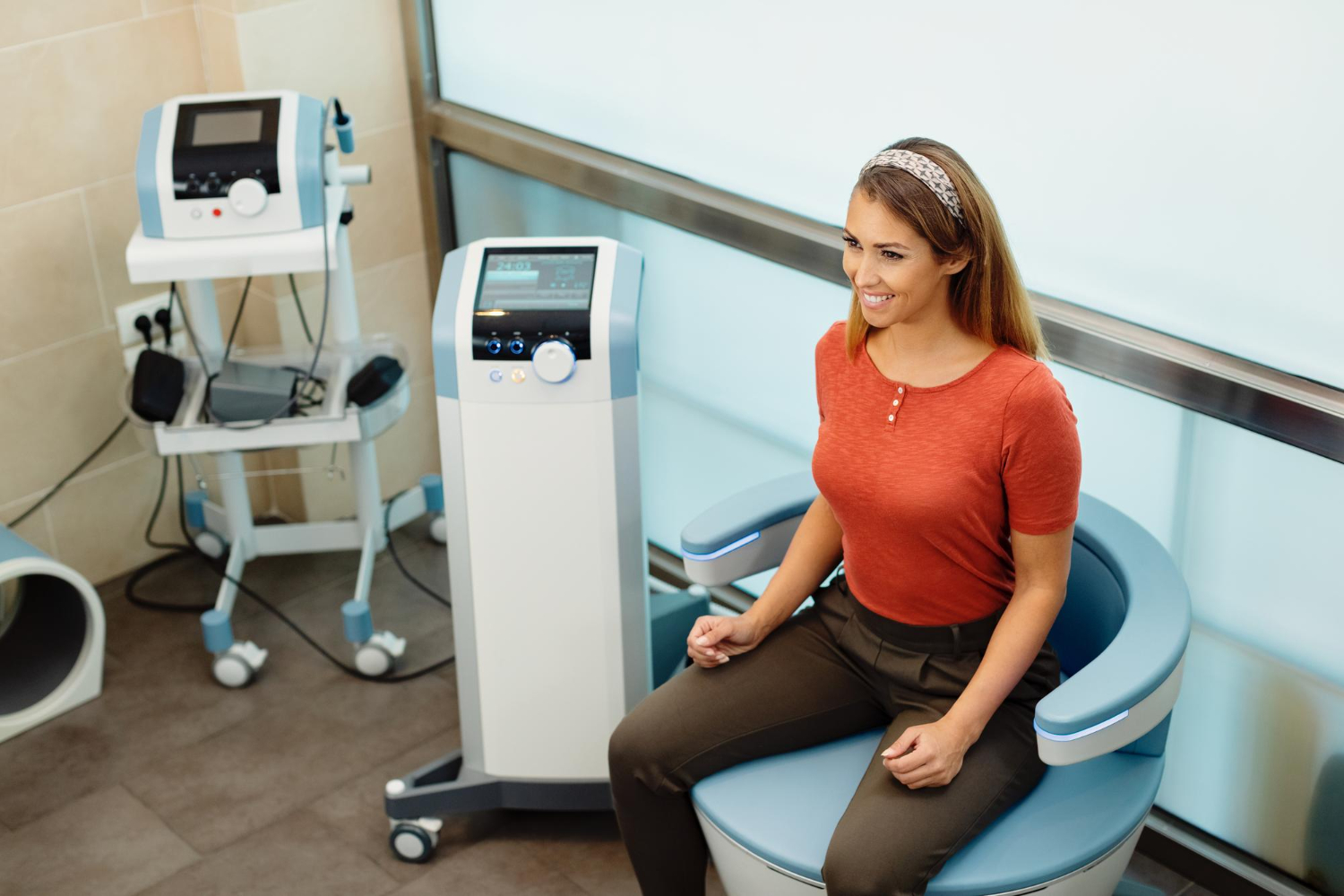
During a session, you settle in on a full-body mat. Or we place a ring applicator over one area, such as a sore knee. The system sends pulsed fields while you rest.
You may notice a mild pulsing feeling. It is not painful. You stay comfortable the whole time.
How many sessions you need depends on your history, your goals, and how your body responds. We set expectations up front and adjust as we go.
What to expect at your first PEMF visit:
- A talk about your history and goals before anything starts
- A full-body mat or a targeted ring applicator
- A mild pulsing feeling, not pain
- Settings chosen for you, not one setting for everyone
- Check-ins on your progress, with changes as needed
PEMF can also be one part of a larger plan at our clinic. Some plans pair it withhyperbaric oxygen therapy orIV infusions. We build that plan with you.
Is PEMF Therapy Safe for You?
PEMF is considered safe for most people. It is non-invasive, so there are no needles, cuts, or medicines involved. In arthritis studies that tracked side effects, they were no more common than with a sham treatment. Still, it isn't right for everyone, so we screen you before your first session.
Tell us before your first session if you:
- Have a pacemaker, insulin pump, or other implanted device
- Are pregnant or think you might be
- Have epilepsy
- Use a medicine patch on your skin
- Have any other medical condition or concern
We'll review your health history with you. If another option fits you better, we'll tell you.
Pay attention to how you feel after a session. If you notice new pain or your pain gets worse, call your provider.
PEMF works alongside your medical care. It does not replace it. Keep seeing your doctor, and let them know you are trying PEMF.
PEMF Therapy in Jerome and the Magic Valley
AtCentral Idaho Wellness Center, PEMF therapy starts with a conversation. We listen to your history and goals first. Then we explain whether PEMF fits your plan and how we would set it up.
We use professional-grade equipment, not a home gadget. Each session's settings are chosen for you. We see people from Jerome, Twin Falls, Wendell, Burley, and across the Magic Valley.
To learn more about how we customize sessions, visit our services page.
And when you're ready to come in, contact us or call at (208) 613-3437 to take charge of your health today!